Enrichment systems’ oxygen nanobubble system dramatically reduces Water consumption
Executive Summary
Water scarcity is becoming one of the most significant constraints facing greenhouse agriculture worldwide. To evaluate potential solutions, a major agricultural research institute in Spain conducted an independent greenhouse tomato study in 2024 examining the impact of oxygen nanobubble irrigation under both normal irrigation and water-reduction conditions. Evapotranspiration (ETc), which is referred below, is the ideal level of irrigation, taking into account both evaporation from the soil and transpiration by the plant.
The study compared four treatments:
- T0: 70% evapotranspiration (ETc) + no oxygen nanobubbles
- T1: 100% ETc + no oxygen nanobubbles
- T2: 70% ETc + oxygen nanobubbles
- T3: 100% ETc + oxygen nanobubbles
The results demonstrated that oxygen nanobubbles can be successfully integrated into commercial greenhouse irrigation systems while maintaining elevated dissolved oxygen levels throughout the irrigation network. The study also documented improved crop vigor, increased fruit production, enhanced fruit quality characteristics, and evidence of greater crop precocity in nanobubble-treated plants.
Most importantly, the study evaluated nanobubble performance under a 30% irrigation reduction strategy, providing independent evidence that nanobubble technology may help growers improve water-use efficiency while maintaining productive greenhouse tomato crops.
The Challenge
Greenhouse vegetable production depends heavily on irrigation water. Across many growing regions, producers face increasing water costs, water-allocation restrictions, groundwater depletion, salinity concerns, and climate-driven drought conditions.
Reducing irrigation volumes typically results in reduced plant vigor, lower yields, delayed harvests, and diminished profitability. The objective of this study was to determine whether oxygen nanobubbles could help maintain crop performance under water-limited conditions.
Trial Overview
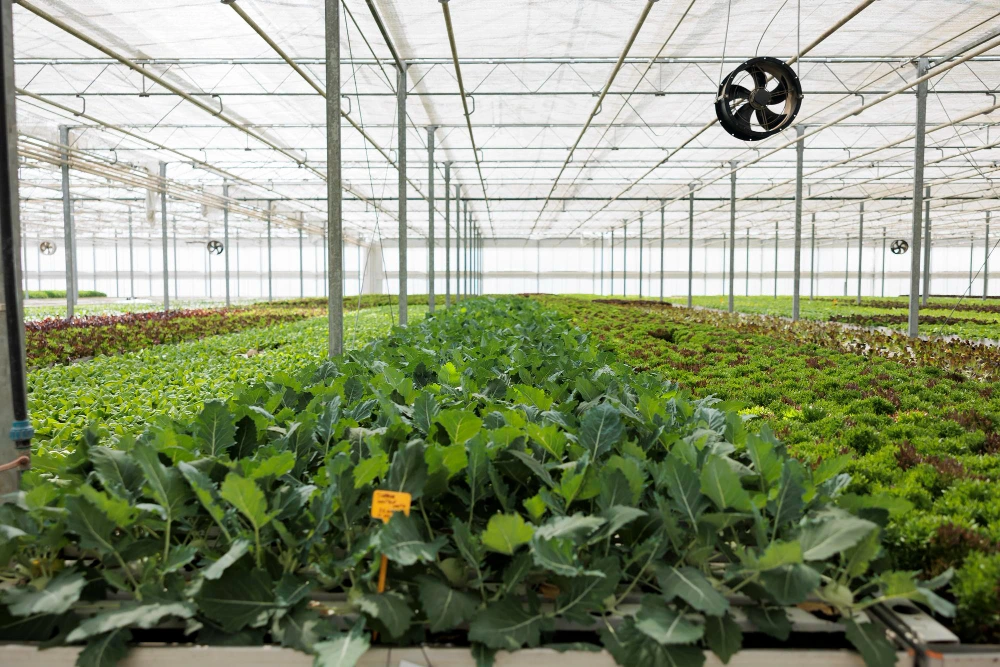
The trial was conducted in Almería, Spain. Key parameters included a 1,600 m² greenhouse, Beef Kabrera tomato variety, a 122-day crop cycle, and four replicated treatments analyzed at a 95% confidence level.
Results
Increased Crop Vigor
Researchers observed evidence of increased plant vigor in the nanobubble treatment receiving full irrigation (T3). Larger stem diameters are generally associated with greater nutrient transport capacity, increased photosynthetic activity, stronger support for fruit production, and improved resilience to environmental stress.
Earlier Production
During the earliest harvest periods, treatments T1 and T3 consistently produced higher commercial and total fruit weights than water-stressed treatments. This finding suggests that maintaining optimal water availability, combined with nanobubble-enhanced oxygenation, may accelerate crop development and support earlier harvests.
Commercial Fruit Production
Key Finding: T3 produced ______% more commercial fruit than the conventional control treatment.
Yield Performance
Commercial Yield (g/m²)
- T0: 4,521
- T1: 5,496
- T2: 5,505
- T3: 6,870
Key Findings:
- T3 commercial yield exceeded T1 by 25%.
- T2 maintained 101% of T1 commercial yield while using 30% less irrigation water.
- Yield reduction under water stress was completely mitigated through nanobubble application
Water Conservation Performance
Water Applied:
- T1 = 100%
- T2 = 70%
- Difference = 30% reduction
Fruit Quality
Researchers observed elevated levels of potassium, sodium, boron, zinc, and soluble solids in nanobubble-treated fruit under deficit irrigation conditions. Lycopene concentrations were highest in the fully irrigated treatments.
Economic Impact
Assume:
- Greenhouse area: 10 hectares
- Annual irrigation requirement: 150 liters/m³, or 15,000,000 liters for 10 hectares
- Annual water cost: $0.30/m³, or $30,000 for 10 hectares
Annual Water Cost Savings:
30%, or $10,000 for 10 hectares
Key Takeaways
- Independent validation by a major Spanish agricultural research institute.
- Evaluated under commercial greenhouse conditions.
- Tested under a 30% irrigation reduction strategy.
- Elevated dissolved oxygen maintained throughout the irrigation system.
- Evidence of increased crop vigor.
- Evidence of earlier production and crop precocity.
- Highest commercial fruit counts observed in the nanobubble/full-irrigation treatment.
- Enhanced fruit-quality characteristics.
- Potential to improve water-use efficiency while maintaining productive greenhouse tomato crops.
About the Research
This study was conducted in 2024 by a major agricultural research institute in Spain specializing in greenhouse crop evaluation and irrigation research. The work was performed under commercial greenhouse conditions using replicated experimental treatments and statistical analysis to evaluate the impact of oxygen nanobubble irrigation under both conventional and reduced-water management strategies.