Enrichment systems’ oxygen nanobubbles system dramatically increases tomato growth and health
Executive Summary
In 2024, a major agricultural research institute in Spain conducted an independent greenhouse trial to evaluate the agronomic impact of Enrichment Systems’ oxygen nanobubble system on the growth and health of tomatoes. The trial compared conventional fertigation against an identical irrigation program supplemented with nanobubbles.
The study demonstrated a 31.3% increase in commercial yield, a 22.7% increase in total yield, more than threefold higher commercial production at the first harvest, and approximately 30% greater basal stem diameter late in the crop cycle. Researchers concluded that nanobubble-treated plants exhibited greater vigor, earlier production, and improved overall crop performance under commercial greenhouse conditions.
These results provide independent validation that Enrichment Systems’ oxygen nanobubble system can improve root-zone oxygenation and translate biological improvements into measurable economic benefits for growers.
Trial Overview
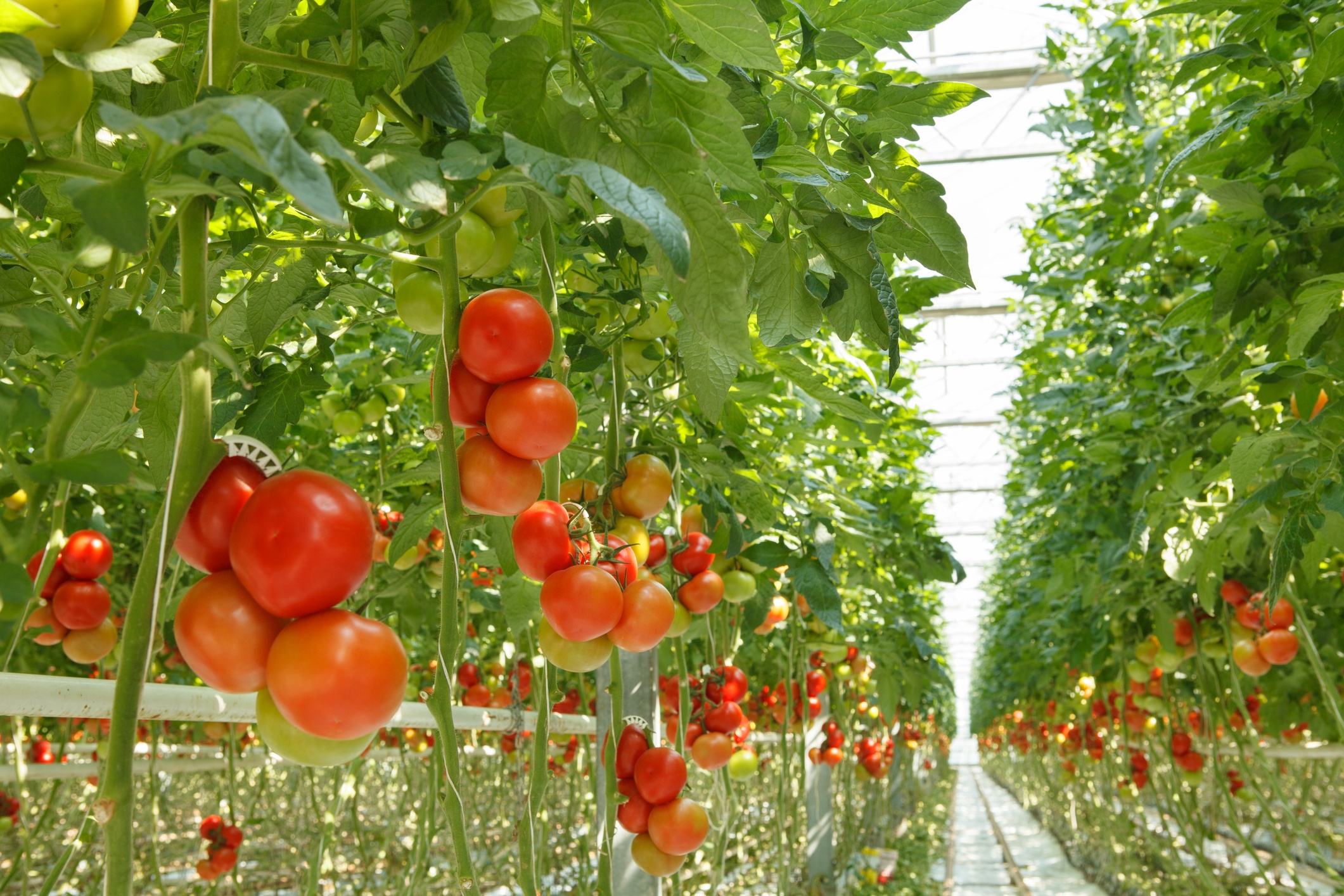
The study was performed in Almería, Spain, one of the most important greenhouse vegetable production regions in the world. Researchers evaluated a five‑month beefsteak tomato crop grown under commercial greenhouse conditions.
The greenhouse contained separate treatment areas receiving either conventional nutrient solution or nutrient solution supplemented with nanobubbles. Both treatments received identical irrigation schedules, nutrient programs, crop management practices, and environmental conditions. The only variable was the presence or absence of nanobubbles in the irrigation water.
The experiment included three replicated blocks per treatment and was analyzed using a 95% confidence level.
Experimental Design
Control Treatment (TA): Standard nutrient solution delivered through drip irrigation.
Nanobubble Treatment (TB): Identical nutrient solution delivered through drip irrigation with nanobubble injection.
Researchers measured plant height, stem diameter, leaf count, fruit count, root biomass, root morphology, chlorophyll levels, dissolved oxygen concentrations, commercial yield, and total yield throughout the crop cycle.
Key Results
1. Commercial Yield
Final commercial yield reached 8,602 g/m² in the nanobubble treatment versus 6,516.7 g/m² in the control treatment.
Yield Increase = 31.3%
This represents the most commercially important outcome of the study because commercial yield directly drives grower revenue.
2. Total Yield
Final total yield reached 9,699.2 g/m² in the nanobubble treatment compared with 7,904.8 g/m² in the control treatment.
Yield Increase = 22.7%
3. Earlier Harvest Production
At the first harvest (75 days after transplanting), commercial production was:
- Control: 135.8 g/m²
- Nanobubble: 420.3 g/m²
The nanobubble treatment produced more than three times the commercial yield at the first harvest. Researchers identified this result as evidence of greater crop precocity and earlier production.
Total yield at the first harvest was similarly elevated:
- Control: 147.6 g/m²
- Nanobubble: 482.9 g/m²
4. Plant Vigor
Basal stem diameter at 73 days after transplanting measured:
- Control: 2.7 cm
- Nanobubble: 3.5 cm
This represents approximately 30% greater stem diameter in nanobubble-treated plants. The research team specifically noted that the larger stem diameter reflected greater plant vigor.
5. Fruit Production
Throughout the season, the nanobubble treatment generally produced more fruits than the control treatment. By 73 days after transplanting, fruit counts reached 12.9 fruits per plant in the nanobubble treatment versus 11.9 fruits per plant in the control treatment.
6. Root-Zone Oxygenation
The study continuously monitored dissolved oxygen levels in the irrigation system. Nanobubble-treated irrigation consistently maintained elevated oxygen concentrations designed to improve root respiration and nutrient uptake.
7. Root Development and Crop Health
Researchers measured root biomass and morphology at multiple points during the trial.
Enhanced root development observed in the nanobubble treatment is consistent with the improved vigor and yield outcomes documented throughout the study.
Economic Implications
For greenhouse vegetable producers, the combination of earlier harvests and higher commercial yield may be more valuable than yield improvement alone.
Earlier production can allow growers to access premium market windows and generate cash flow sooner. A 31.3% increase in commercial yield has the potential to create substantial revenue gains when applied across large commercial facilities.
Because nanobubble systems can be integrated into existing drip irrigation infrastructure, growers may realize these gains without major changes to cultivation practices.
Key Takeaways
- 31.3% increase in commercial yield.
- 22.7% increase in total yield.
- More than 3× greater commercial production at first harvest.
- Approximately 30% greater basal stem diameter.
- Improved plant vigor and earlier production.
- Independent validation by a major Spanish agricultural research institute.
- Demonstrated under commercial greenhouse conditions using replicated experimental design.
The study provides strong third‑party evidence that oxygen nanobubble irrigation can improve greenhouse tomato performance and increase marketable production.